
An Alpine Ghost Town Hidden in the Greek Islands
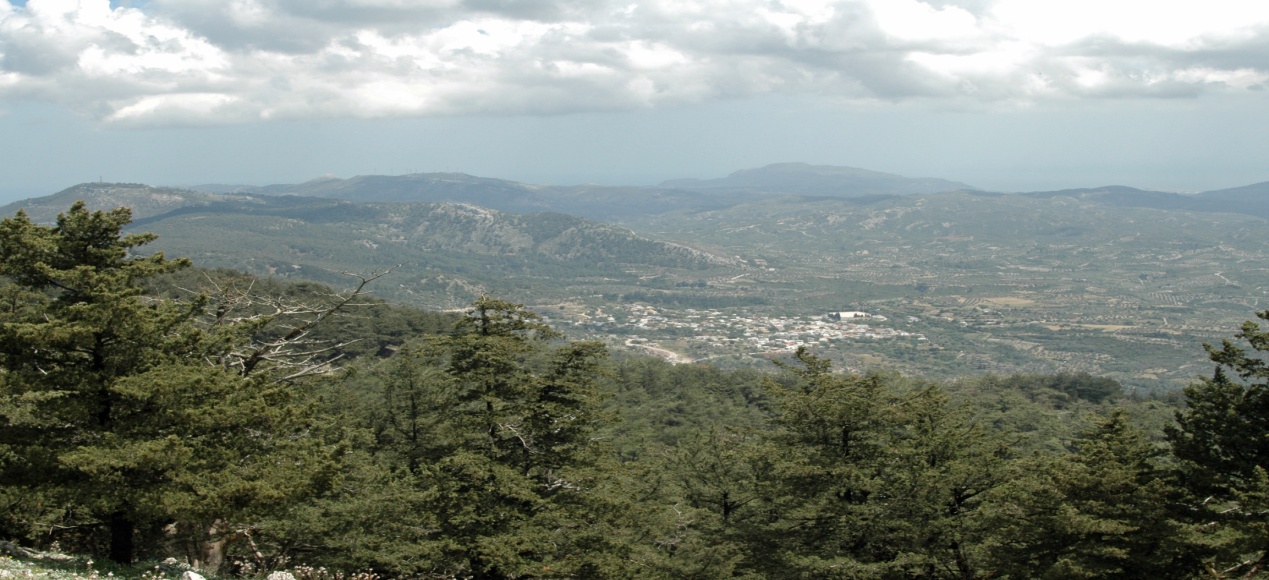
When travelers think of Rhodes, their minds fill with whitewashed village lanes, turquoise Aegean bays, and ancient sun-drenched ruins. Few imagine driving through dense alpine forests of Aleppo pines and Italian cypresses only to stumble upon a decaying European mansion that looks like a forgotten gothic film set.
Perched near the 800-meter summit of Mount Profitis Ilias – the island’s third-highest peak – stands Villa de Vecchi, widely known today as ‘Mussolini’s Abandoned Villa.’ Shrouded in mountain fog during autumn and winter, and surrounded by eerie silence, this decaying colonial relic offers a fascinating, haunting window into a tumultuous chapter of Mediterranean history.
The Italian Fascist Ambition: Constructing the ‘Pearl of the Levant’
Following the Italo-Turkish War of 1912, Italy wrested control of the Dodecanese islands from the collapsing Ottoman Empire. In the 1930s, Benito Mussolini appointed Count Cesare Maria de Vecchi – a staunch fascist Quadrumvir and former Governor of Italian Somaliland – as the Governor of the Aegean Islands.
De Vecchi harbored grand imperial visions. He sought to transform Rhodes into a glorious Mediterranean outpost of Fascist Italy and a personal royal retreat for King Victor Emmanuel III and Benito Mussolini himself. Between 1936 and 1938, he commissioned the construction of this grand two-story hunting villa high on the forested slopes of Profitis Ilias, where the mountain climate offered cool relief from blistering summer coastal heat.
Built with local stone, hand-carved mountain timbers, and monumental glass windows offering commanding views over the sea toward Turkey, the villa was outfitted with luxurious Italian furnishings, marble fireplaces, polished parquet flooring, and grand verandas.
Did Mussolini Ever Actually Stay Here?
Despite popular folklore and local travel legends, Benito Mussolini never spent a single night inside Villa de Vecchi. By the time the estate was completed in 1939, Europe was spiraling into the catastrophic fires of World War II.
De Vecchi used the estate as his personal summer governor’s residence until he was recalled to Italy following the collapse of the fascist regime in 1943. After the British liberation and the subsequent unification (Enosis) of the Dodecanese with the Kingdom of Greece in 1947, the estate fell into the hands of the Greek state.
Over the decades that followed, the mansion was abandoned. Looters stripped the chandeliers, antique furniture, and marble details, leaving behind a weathered concrete shell adorned with peeling plaster, broken wooden staircases, and evocative graffiti left by urban explorers from across the globe.
The Elafos & Elafina Hotels: Swiss Chalets Under the Greek Sun
Just down the pine-shaded trail from the abandoned villa stands one of the architectural marvels of Rhodes: the historic Elafos (‘Stag’) and Elafina (‘Hind’) buildings. Constructed by Italian engineers in 1929 and 1932, these remarkable buildings feature steep pitched wooden roofs, chalet balconies, and timber framing that look as though they were lifted directly from the Swiss Alps or the Italian Dolomites.
Lovingly restored in recent years, the Elafos Hotel now operates once again, allowing visitors to sit on its shaded stone terrace, sip a rich Greek coffee, and admire the fresh mountain breeze while listening to the wind sighing through the pine needles.
The Eleousa Sanatorium & The Rare Gizani Fish
Descending the southern foothills of Profitis Ilias brings you to the haunting settlement of Eleousa (originally founded by the Italians as Campochiaro in 1935). Built as a model agricultural settlement for Italian colonists from Trentino, Eleousa features monumental rationalist architecture, including an imposing town hall, a cinema, and a Roman Catholic church.
Most famous, however, is the massive abandoned Italian Sanatorium on the town’s perimeter, constructed to treat tuberculosis patients in the fresh mountain air. Just across the road sits the historic round water cistern filled with mountain spring water, home to the protected Gizani (Ladigesocypris ghigii) – a tiny, critically endangered freshwater fish found nowhere else on earth except in the mountain streams of Rhodes.
How to Visit Profitis Ilias with Rhodes Adventures
While paved roads reach the hotels, the most breathtaking way to experience Mount Profitis Ilias is via the off-road trails connecting the mountain to traditional villages like Apollona, Salakos, and Eleousa.
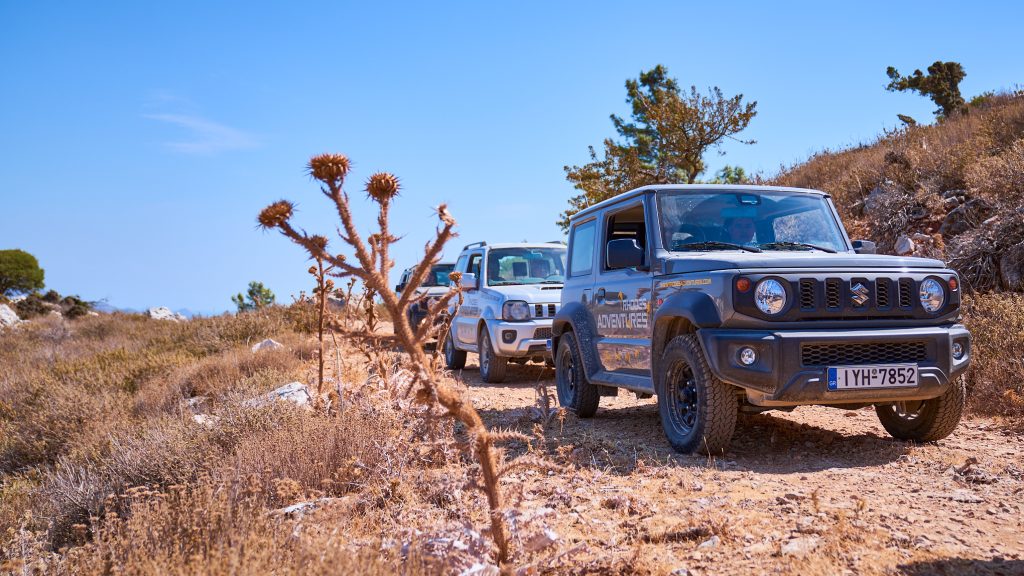
In our Self-Drive Jeep Safari and Polaris Buggy Tour, our convoy climbs rough forest tracks carved along the mountain ridge, stopping at the historic Italian sanitarium, the natural water fountain of Eleousa, and the eerie ruins of Villa de Vecchi. It is an unforgettable blend of off-road driving thrills, fascinating geopolitical history, and crisp mountain nature.