
The Sentinel of the Western Sea
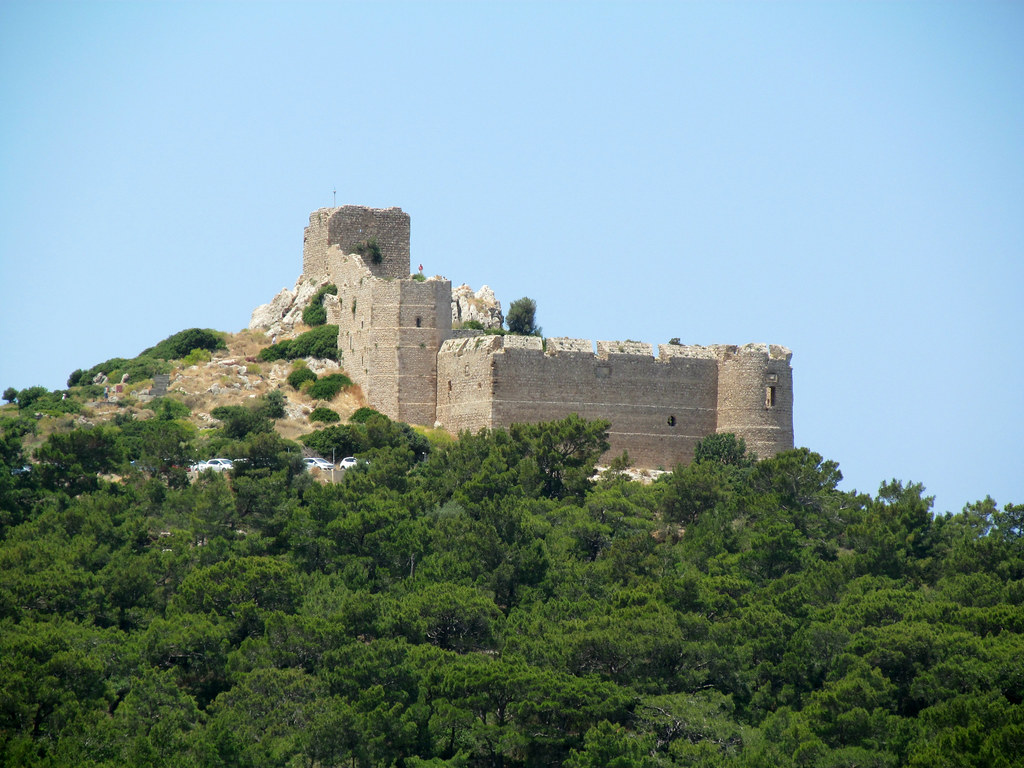
Perched dramatically on a rocky headland 131 meters above the crashing azure waves of the western Aegean, Kritinia Castle (locally known simply as Kastellos) is one of the most romantic and visually impressive medieval fortifications in all of Greece.
While the world-famous Palace of the Grand Master in Rhodes Town showcases the administrative pomp and refined architecture of the medieval Knights Hospitaller, Kritinia Castle showcases their raw, unyielding military fortitude. This was the frontier outpost: the fortified sentinel tasked with scanning the horizon for enemy fleets, pirate raiding parties, and Ottoman armada ships sailing across the Dodecanese.
A Fortress Forged Under Ottoman Threat
In 1472, Grand Master Giovanni Battista Orsini initiated the primary construction of the fortress to protect the farming villages of western Rhodes from relentless corsair raids. A few years later, facing the looming threat of Sultan Mehmed II’s expansionist Ottoman navy, the brilliant military architect Grand Master Pierre d’Aubusson substantially reinforced and expanded the castle’s battlements.
When walking up the ramparts today, you can still clearly see the weathered marble coat-of-arms of Pierre d’Aubusson carved into the ancient stone walls alongside the crest of Grand Master Fabrizio del Carretto. In 1480, during the epic First Ottoman Siege of Rhodes, Ottoman forces landed thousands of soldiers on the western beaches and launched a fierce assault on Kritinia Castle. Despite suffering heavy bombardment, the valiant garrison held the stronghold, repelling the invaders and safeguarding the rural civilian population sheltered within its walls.
Walking Through the Ruins: What to Look For
Today, while the interior buildings have succumbed to the march of time, the exterior defensive curtain walls and multi-level battlements remain remarkably intact. As you explore the site:
– The Outer Wall & Arrow Slits: Observe the thick perimeter masonry designed to withstand early cannon artillery, interspersed with narrow cross-bow and arquebus firing slits.
– The Chapel of Saint John: Inside the castle courtyard stands the humble, white-plastered Byzantine chapel dedicated to Saint John the Baptist. Step inside to admire fragments of 16th-century ecclesiastical wall frescoes that have survived centuries of sea spray.
– The Watchtower Lookout: Climb to the highest platform of the upper bastion. From here, the sentinel knights commanded an unobstructed 360-degree panorama. Looking west across the glistening strait, you can see the rugged island of Chalki, the uninhabited islets of Alimia, Makri, and Stroggyli, and the mountainous coastline of southwestern Turkey.
Kritinia vs. Monolithos: The Two Medieval Guardians
Travelers frequently ask about the difference between Kritinia Castle and its sister fortress further south, Monolithos Castle:
– Kritinia Castle: Offers larger, more expansive preserved stone curtain battlements, a walk-in chapel with intact frescoes, easier stone stairway access, and direct visual command over the offshore islands of Chalki and Alimia.
– Monolithos Castle: Sits perched atop an impossibly steep 240-meter isolated limestone monolith, offering jaw-dropping sheer drop-offs and wilder winds. Both fortresses communicated with each other via smoke signals by day and fire beacons by night to alert Rhodes Town of naval invasions.
The Sunset of a Lifetime
While Lindos on the eastern coast is famous for its morning sunrise, Kritinia is undisputed royalty when it comes to sunsets. Because the castle faces due west with an unobstructed horizon over the Aegean Sea, the late afternoon light bathes the weathered medieval stones in molten gold.
As the sun sinks below the silhouette of Chalki island, the sky explodes into shades of fiery orange, crimson, and lavender, casting long shadows through the ancient arched gateways. It is easily one of the three most photogenic sunset viewpoints anywhere on Rhodes.
Kritinia Village and Combining with a 4×4 Tour
Just two kilometers inland lies the charming village of Kritinia, founded by refugees from Crete during Ottoman times (hence its name, meaning ‘Little Crete’). The village maintains proud Cretan traditions, music, and cuisine, surrounded by terraced vineyards, olive groves, and wild mountain scrub.
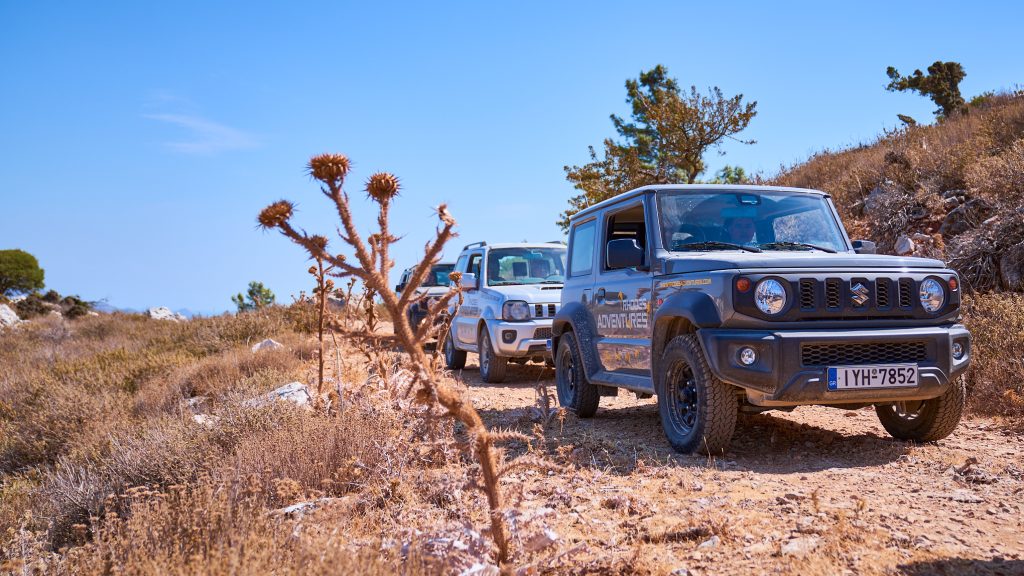
At Rhodes Adventures, our full-day 4×4 safari routes regularly incorporate Kritinia Castle as a crown jewel stop. Approaching via remote dirt tracks that snake through coastal pine forests and secret cliffside pathways, our guests get to experience this majestic fortress without the commercial rush of organized bus tours.